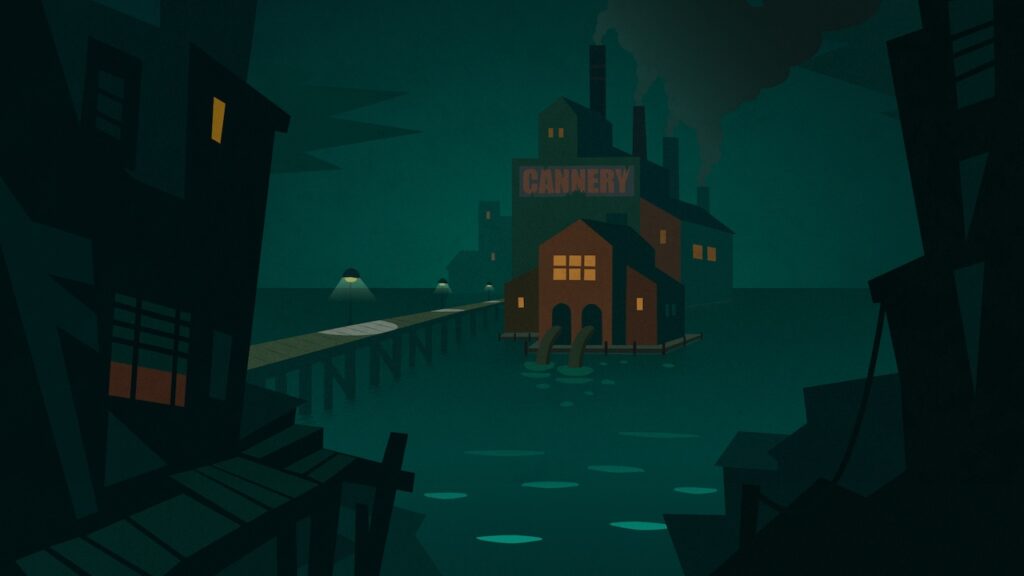
You wake up in a sardine can.
Still alive.
That’s already suspicious.
You don’t remember how you got there.
You don’t remember who did it.
You just know one thing:
Someone wanted you packed, sealed, and gone.
The Sardine Identity is a 2D point-and-click adventure set in Undertow, a crooked underwater city of jazz clubs, back alleys, shady bars, and dirty secrets. You play as Sal Finley, a sardine private investigator who wakes up inside a sardine can with no memory of how he got there. Now he wants answers.
Welcome to Undertow
This city doesn’t kill you fast.
It drags you under.
Undertow is a noir city through and through: all neon, shadows, and bad decisions. A place where deals happen in the dark and nobody asks twice. Where every smile hides a hook and every answer costs more than you can afford.
You don’t live here.
You survive.
A visual style with teeth
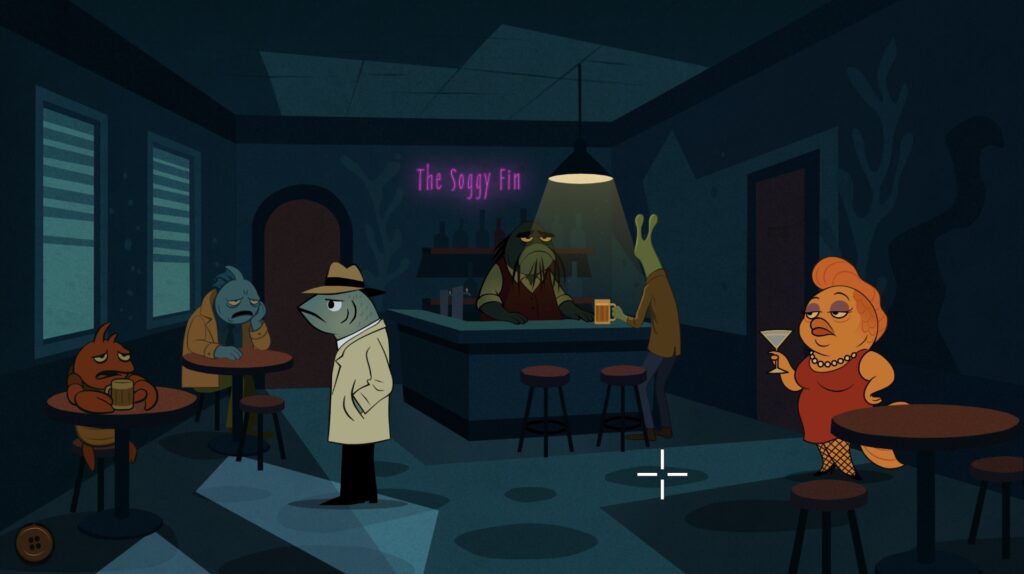
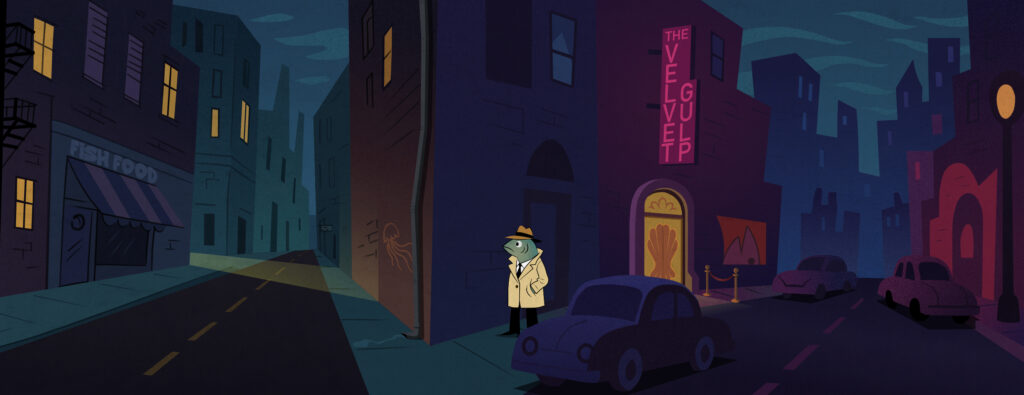
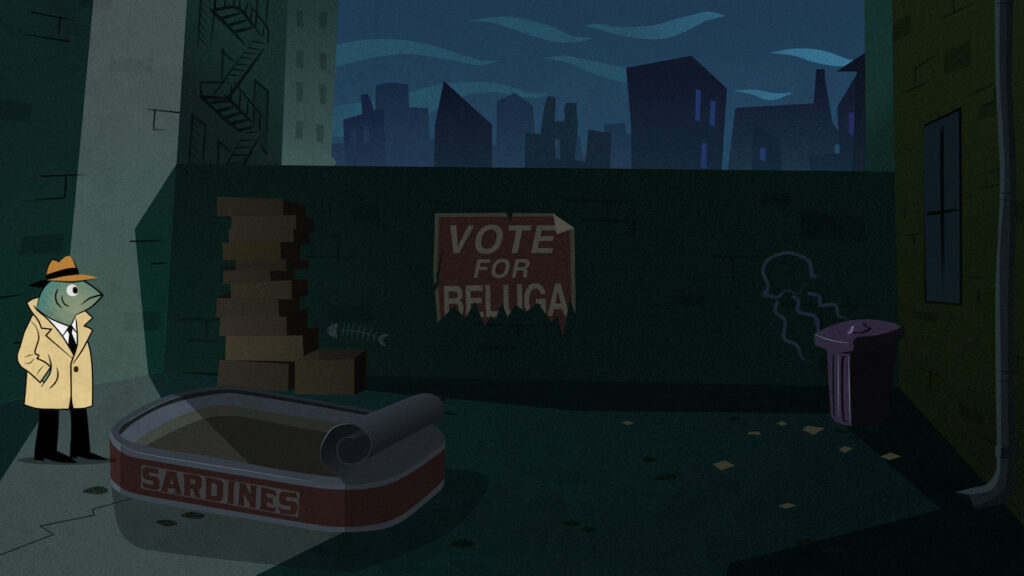
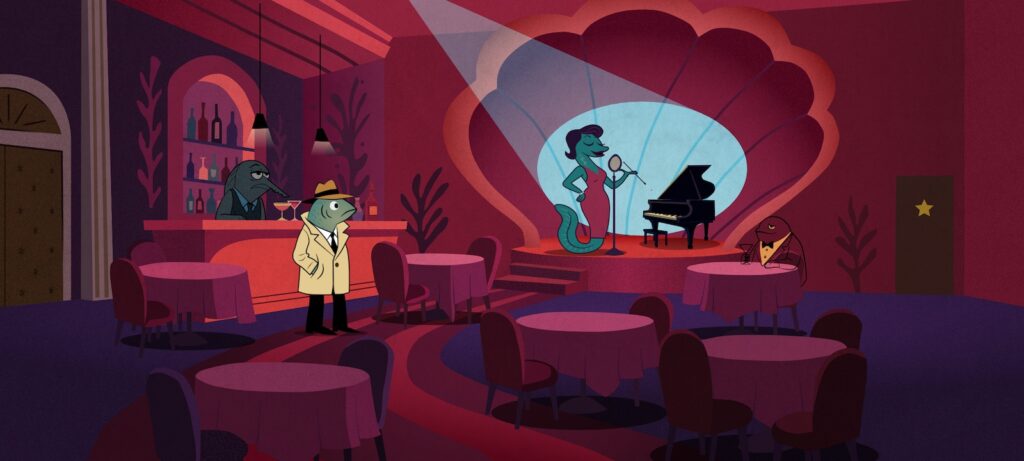
One of the things that makes The Sardine Identity stand out is its visual style. The game is inspired by the bold, stylized world of mid-century animation, especially the spirit of Maurice Noble’s work: abstract shapes, flat colors, striking compositions, and backgrounds that feel more like graphic design and painting than literal realism.
That means Undertow does not look like a generic underwater cartoon world. It looks theatrical, moody, and deliberately designed. Buildings lean at uneasy angles. Rooms feel like stage sets for a bad decision. Light cuts through darkness in hard stripes. Sea creatures wear trench coats, dresses, and guilty expressions.
All backgrounds, characters and items are hand-painted, no AI generated content is going to be in the game.
Dark surf, noir pulse
The soundtrack is not there to politely sit in the background. It is there to pull you into Undertow.
The music for The Sardine Identity is shaped by dark surf rock, with the kind of moody, twanging, nocturnal energy you might associate with Tarantino soundtracks — music that feels cool, dangerous, and a little haunted. There is also a touch of the old detective-movie spirit, including the kind of sly, memorable feel you get from the Miss Marple title music.
So do not expect soft ambient wallpaper. Expect character. Expect tremolo guitars, deep bass, drums with swagger, and themes that feel like they belong to cigarette smoke, wet pavement, and a detective who makes poor life choices. It is noir music by way of surf, crime cinema, and late-night atmosphere — catchy enough to stay with you, but dirty enough to feel dangerous.
The soundtrack will be recorded live, using actual instruments. No royalty free music or AI music.
Mystery, humor, and bad company
At heart, The Sardine Identity is a detective story, but it is not interested in being solemn all the time. It mixes mystery and emotional weight with dry humor, strange characters, and a world full of fishy metaphors and deadpan one-liners. Undertow is full of sharks in expensive suits, washed-up regulars, dangerous ex-lovers, and people who know much more than they say.
The tone is inspired by classic noir, but with enough absurdity to keep it fresh. The game wants you to smile, even while everything is going wrong. It wants you to enjoy the atmosphere, the language, the oddness of the world, and the slow realization that beneath all the jokes there is something real at stake.
Why play it?
Because it is not just another retro-style adventure.
It is a short, dense, hand-crafted noir comedy with a strong visual identity, a memorable setting, and a soundtrack built to seep into your head. It is for people who love classic point-and-click adventures, stylized art, detective stories, strange worlds, and games with personality.
If you like the idea of stumbling through a dark underwater city as a half-broken sardine detective, chasing memory, betrayal, and the truth through bars, clubs, courtrooms, and canneries, then Undertow is waiting.
And it does not look safe.